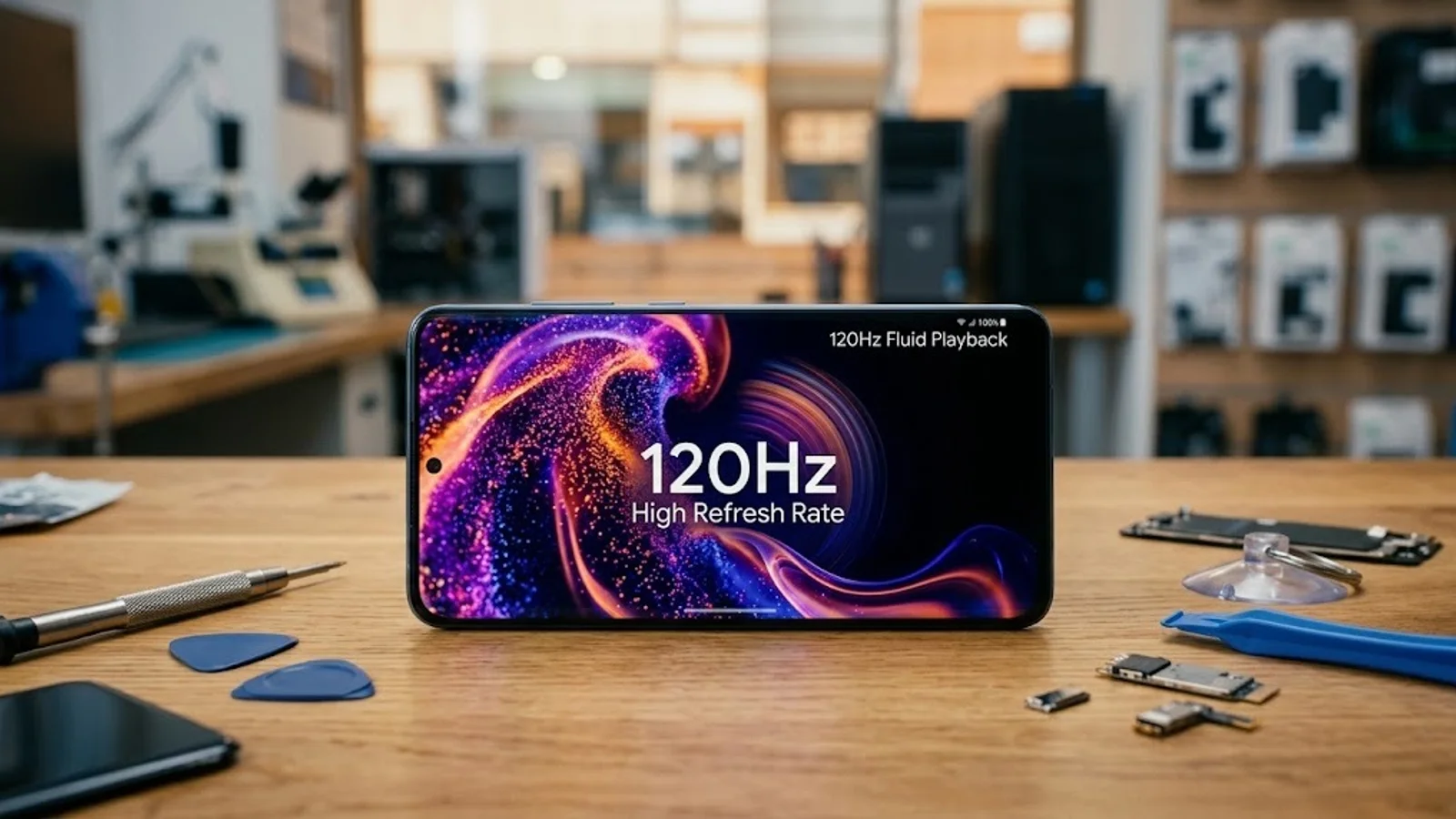
OLED vs LCD: The Real Difference
On an OLED screen every pixel makes its own light. Black pixels simply turn off, which gives deep blacks, strong contrast, and a very thin panel. An LCD screen needs a backlight layer behind the pixels, so it is thicker, blacks look more gray than black, and the borders around the picture are usually a little wider.
The difference goes beyond looks. Because an LCD panel is thicker, the phone can feel slightly different in the hand, and features that depend on the OLED panel may not work the same. On many Samsung Galaxy models, for example, the in-display fingerprint reader only works through an OLED panel, so it may stop working with an LCD replacement. A screen that does not match the original specifications also tends to use more battery. An LCD backlight stays on even when the screen is mostly dark, and a panel that works harder than the original generates more heat. That extra heat makes the phone feel warmer and drains the battery even faster.
The Three Replacement Screen Quality Levels
Most repair shops, including ours, group replacement screens into three levels. Knowing the names helps you compare quotes from one shop to another.
Economy aftermarket screen (LCD)
This option uses LCD technology, so brightness and contrast are slightly lower than the original, and the borders may be slightly thicker. It is a functional, budget-friendly repair that works well for basic daily use.
Premium quality screen
A premium screen matches the original factory display in brightness, color accuracy, thinness, fit, and touch feel. On phones that came with OLED from the factory, this is the option that keeps the phone looking and feeling the way it did out of the box.
Genuine screen (original)
Genuine screens are original manufacturer parts. Shops usually have some models available in stock, either new or in pull condition (removed from another phone in good shape), and others can be ordered new. Stock changes often, so always call ahead and ask about time, price, and availability for your exact model.
Refresh Rate: Why 60Hz, 90Hz, and 120Hz Matter
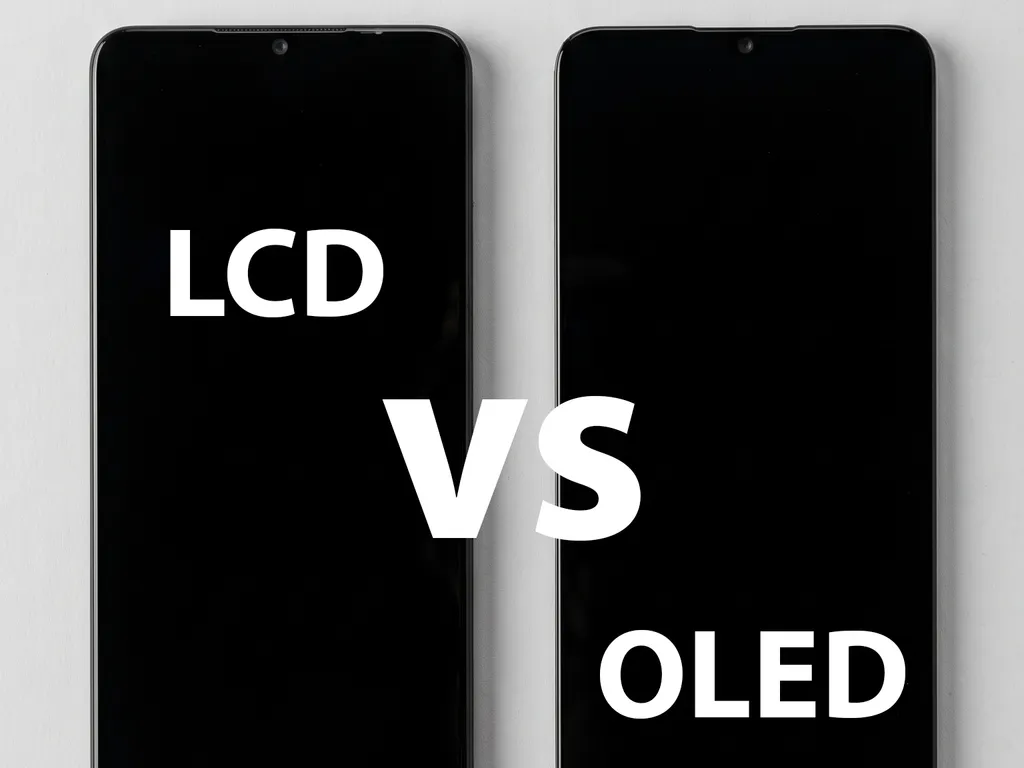
Refresh rate is how many times per second the screen redraws the picture. A 120Hz screen updates twice as often as a 60Hz screen, which makes scrolling, animations, and games look much smoother. If your phone came with a 120Hz display, going down to a 60Hz replacement is immediately noticeable.
One detail many people do not know: refresh rate and panel type are separate. Aftermarket LCD screens come in different refresh rates, such as 90Hz or 120Hz, and the same is true for OLED screens. So "OLED" alone does not guarantee the original speed. That is why the refresh rate is one of the first things you should ask about.
The goal is always to match the original specifications, not to go beyond them. A phone that was built with an LCD screen cannot be upgraded to OLED, and a phone that came with a 60Hz display will not run at 120Hz with a new screen, because its hardware and software are designed for the original panel. If your phone came with LCD or 60Hz, a good replacement simply keeps it that way.
Which iPhone Models Have OLED and 120Hz Screens
Here is what each iPhone came with from the factory. If your model is OLED, an LCD replacement will look noticeably different. If it is 120Hz, ask for a replacement that keeps 120Hz.
| iPhone model | Original screen | Refresh rate |
|---|---|---|
| iPhone 8, 8 Plus, SE (2nd and 3rd gen) | LCD | 60Hz |
| iPhone X, XS, XS Max | OLED | 60Hz |
| iPhone XR, 11 | LCD | 60Hz |
| iPhone 11 Pro, 11 Pro Max | OLED | 60Hz |
| iPhone 12 mini, 12, 12 Pro, 12 Pro Max | OLED | 60Hz |
| iPhone 13 mini, 13 | OLED | 60Hz |
| iPhone 13 Pro, 13 Pro Max | OLED | 120Hz |
| iPhone 14, 14 Plus | OLED | 60Hz |
| iPhone 14 Pro, 14 Pro Max | OLED | 120Hz |
| iPhone 15, 15 Plus | OLED | 60Hz |
| iPhone 15 Pro, 15 Pro Max | OLED | 120Hz |
| iPhone 16, 16 Plus, 16e | OLED | 60Hz |
| iPhone 16 Pro, 16 Pro Max | OLED | 120Hz |
| iPhone 17, iPhone Air, 17 Pro, 17 Pro Max | OLED | 120Hz |
| iPhone 18 Pro, 18 Pro Max | OLED | 120Hz |
Which Samsung Galaxy Phones Have OLED and 120Hz Screens
Samsung uses AMOLED, its version of OLED, on almost every Galaxy phone except some of the most affordable A series models. Refresh rates vary more than on iPhone, so this table groups the models we see most often.
| Galaxy model | Original screen | Refresh rate |
|---|---|---|
| Galaxy S20 series and newer, FE models included | AMOLED | 120Hz |
| Galaxy S10 series and older | AMOLED | 60Hz |
| Galaxy Note 20 Ultra | AMOLED | 120Hz |
| Galaxy Z Fold3, Z Flip3 and newer | AMOLED | 120Hz (main screen) |
| Galaxy A53, A54, A55, A56 | AMOLED | 120Hz |
| Galaxy A34, A35, A36 | AMOLED | 120Hz |
| Galaxy A25, A26 | AMOLED | 120Hz |
| Galaxy A15, A16, A17 | AMOLED | 90Hz |
| Galaxy A05s, A06, A07, A14 | LCD | 60Hz or 90Hz |
Samsung sometimes ships different screens for the same model name depending on the region or the 4G and 5G versions, so the exact model number (found in Settings, About phone) is what confirms the right part.
Google Pixel, Motorola, and Other Brands
Every Google Pixel uses an OLED screen. The Pixel 6 Pro, 7 Pro, and every Pixel from the Pixel 8 onward, including the 8a and 9a, run at up to 120Hz. The Pixel 4, 5, 6, 7, and 7a run at 90Hz, and older models and the 6a run at 60Hz. Motorola is more mixed: many Moto G models use LCD, while the Edge line uses OLED at 120Hz or higher. For any brand, the rule is the same: match the original panel type and refresh rate whenever the budget allows.
When an LCD Screen Makes Sense, and When It Does Not
An economy LCD screen has its place. If you plan to trade in or sell the phone soon, an LCD repair gets it working and presentable for less, so you keep more of the trade-in value. The same goes for an old phone you only need to turn on long enough to recover photos, contacts, or two factor codes before moving to a new device.
For a phone you will keep using every day, we do not recommend going from OLED to LCD. The lower contrast, thicker borders, and possible loss of features like the in-display fingerprint reader become noticeable quickly, and many customers end up wishing they had chosen the premium option from the start.
What to Ask Before Your Screen Repair
These questions take a minute and help you compare options clearly, whether you visit us or any other shop:
- Is the replacement OLED or LCD, and what did my phone come with?
- Does it keep the same refresh rate as the original, 60Hz, 90Hz, or 120Hz?
- Is a premium or genuine screen available, and is the genuine one new or in pull condition?
- Will features like the fingerprint reader, Face ID, and True Tone keep working? On many iPhones, True Tone has to be transferred from the original screen.
- How long will the repair take, and is the part in stock or does it need to be ordered?
On iPhone XS and newer models, it also helps to know that any screen that is not a genuine Apple part shows a notice in Settings. It does not affect how the phone works, but it is better to hear it before the repair than after.
How We Handle Screen Options at Our Shop
For our customers in Hialeah and across Miami-Dade, we always offer 120Hz replacement screens for phones that came with 120Hz, so the phone keeps the same refresh rate it had from the factory. We generally keep both an economy and a premium option available, and we recommend the upgrade when the price difference is worth it, not when the difference in quality is too small to matter. Either way, we explain each option clearly and recommend based on your situation, whether that is daily use, a trade-in, or a quick data rescue. Our iPhone Screen Repair page covers the screen options we offer for each iPhone model.
Frequently Asked Questions
Is an LCD replacement screen worth it?
It can be, depending on your plans. An economy LCD screen is a good choice if you will trade in or sell the phone soon, or only need it working to recover your data. For a phone that originally had OLED and that you will use every day, a premium screen is usually the better long-term choice.
Will a replacement screen keep my phone's 120Hz refresh rate?
Only if the replacement is made for 120Hz. Aftermarket LCD and OLED screens are sold in different refresh rates, such as 90Hz or 120Hz, so always ask before the repair. At our shop, phones that came with 120Hz get a 120Hz replacement so they keep the same smooth scrolling as the original.
What is the difference between a premium screen and a genuine screen?
A premium screen is a high-quality replacement that matches the original in brightness, color, thinness, fit, and touch. A genuine screen is the original manufacturer part, available new or in pull condition for some models and by order for others. Call ahead to check time, price, and availability for your exact phone.